
A Bit About Me
My name is Colin Wanless, and I am currently a senior at Emerson College majoring in the Business of Creative Enterprises. I have always been drawn to the intersection of creativity, business, and law, and much of my academic and extracurricular work showcases this. I am the co-founder and co-president of Crown Studios, a student-run creative hub dedicated to connecting students across various majors and producing original work. Through Crown Studios, I have helped organize events, support student filmmakers and musicians, and create a platform for collaboration between artists, entrepreneurs, and innovators. This experience has reinforced my passion for both the entertainment industry and the structural aspects of how creative projects are developed and managed.
Outside of the classroom, I am also a DJ and performer, building my career under the name COLONE. Music has been a creative outlet for me for the past few years. I love fusing sounds with film and bringing it to life on the dance floor. Looking ahead, my career goal is to attend law school, with a particular focus on entertainment law. I aim to strengthen my legal and negotiating skills so that I can assist artists, musicians, and performers in navigating the business side of their careers. My long-term ambition is to become a talent agent and eventually a film producer, utilizing my legal foundation to advocate for creatives and support innovative projects. I am especially interested in pursuing law in California, where the entertainment industry is centered, and I envision a career that merges my love for the arts with my drive to make a lasting impact behind the scenes.
09/8/2025
9/08/25 (The Alchemist Pg 0-50)
Santiago selling his sheep illustrates that pursuing dreams often requires giving up security and comfort. It’s about taking risks for something greater. I can relate to this because I’ve had to make choices that pushed me outside my comfort zone. For instance, when I founded Crown Studios at Emerson, I spent countless sleepless nights on extra work, sacrificing time that could have been spent relaxing or watching TV. However, this effort ultimately brought me closer to my long-term goal of running my own organization to help artists. Similarly, with my law school aspirations, I know I need to sacrifice some downtime to focus on studying if I want to get into a good college. Sacrifices can be intimidating, but they are often necessary if you genuinely want to pursue something meaningful.
I believe in the concept of a Personal Legend, which is similar to having a purpose or calling in life, and it exists. Everyone has something they are meant to pursue, although discovering it often takes time and involves taking risks. I am fortunate to have found my Personal Legend early in life. I feel deeply connected to creativity and helping others express themselves, whether that's through music, film, or eventually, law.
When the book states, "When you want something, all the universe conspires to help you achieve it," I believe it's saying that when you fully commit to something, truly going all in and putting your mind into it, opportunities begin to open up. I’ve experienced this myself in small ways, like when I started DJing. Once I dedicated myself to learning and performing, I suddenly met people around Boston who helped me get gigs, offered advice, and encouraged me to move forward. Because I was actively networking and genuinely committed to the idea of DJing, doors opened up. The same thing happened when I launched my database to help student artists. It didn’t happen by magic; it occurred because I focused on making the organization a reality, which in turn opened more doors for me. This is a valuable lesson that I keep close, as it drives my daily efforts.

The Alchemist is a novel by Brazilian author Paulo Coelho, first published in 1988. Originally written in Portuguese, it has been widely translated and has become an international bestseller. In Dr. Jaes' Senior Residency, we will respond to prompts based on our reading of the novel and create digital assets to accompany our work. Below is my coursework from the semester.

My Journey through the eyes of the Alchemist
Myself as an Actor Then


Myself pursing my true passion of producing Now


My Emerson producing Journey





9/16/25 (The Alchemist Pg 53-107)
1. The crystal merchant fears change and is reluctant to pursue his own dream of traveling to Mecca. What does his character represent in the context of the novel? How does his fear of change contrast with Santiago's desire to move forward?
The crystal merchant represents fear, comfort, and the danger of remaining stagnant in life. He dreams of going to Mecca, but his fear of change holds him back from pursuing it. This symbolizes how many people avoid chasing their dreams due to fear of failure or the unknown. In contrast, Santiago is willing to sacrifice stability and comfort to move forward toward his Personal Legend. The merchant embodies the conventional path, while Santiago represents the courage to step into the unknown.
I can relate this to my own experience when I started college. Initially, I wanted to pursue acting, but upon further reflection, I realized that what I truly desired was to become a talent agent and help others achieve their dreams. By following my Personal Legend and taking the road less traveled, I have brought much more joy and passion into my life.
2. Santiago often reflects on omens and signs as guides along his journey. Do you think these signs are truly guiding him, or are they simply interpretations that fit what he wants to see? How do you think we interpret signs in our own lives?
Santiago often reads omens and signs as encouragement to continue his journey. These signs serve as both genuine guidance in the story and reflections of his own hopes. In life, people often interpret "signs" through the lens of their current desires or needs, such as taking a coincidence as encouragement or viewing a setback as a warning. I felt this today when I looked up at a concert and saw the yin and yang symbol. In that moment, I felt balanced after completing all my assignments, and I was ready to dance as a reward. Just like Santiago, sometimes seeing a sign helps me keep pushing forward, even if they don't hold any real significance.
3. The main character seems to be struggling between returning to his old life as a shepherd and continuing his quest for treasure. What does this dilemma reveal about the challenges of staying committed to one’s dreams? Have you ever faced a similar crossroads in your own life?
Santiago's struggle between returning to his life as a shepherd and continuing his quest illustrates the difficulty of remaining committed to long-term dreams. Going back feels safe and familiar, while pursuing treasure means risking failure. This dilemma reflects the universal tension between security and growth.
I have faced similar crossroads, as I mentioned earlier, when deciding whether to enter a conventional business or continue pursuing my passion for the arts. One option is comfortable, while the other leads into the unknown. Ultimately, I've decided that my love for the entertainment industry is worth pursuing over taking a more conventional route. To showcase this journey, I've included videos of who I was as an artist in high school and how I've evolved into a business person in the arts, helping others achieve their passions.


1. Journey vs. Destination
Santiago realizes that chasing his Personal Legend isn't just about the treasure at the end; it's about the valuable lessons, the people he encounters, and the growth he experiences along the way. Both aspects matter. The process is essential because it is during this time that you strengthen your character, skills, and knowledge. Without a process, there is no end, as the journey shapes who you become. Even if the destination changes, the growth from the process remains with us.
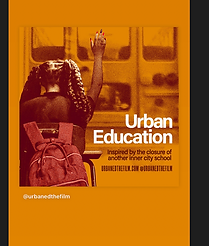
I can relate this to my journey at the start of my college career. I was wide-eyed and eager to be a producer, but I didn't truly understand what that entailed. Now, I have had the honor and ability to serve as an executive producer on over 20 student-led productions and work as a production assistant on two professional sets: one for an independent film called *Urban Ed* and the other for a Netflix series debuting on October 19, 2025, named Boots. Through these opportunities, I've learned valuable leadership skills and gained insights into running a set and being a leader in the film industry. Without individually going through each process, I would never have developed the skills I have today.
2. Striving to Be Better
"When we strive to become better than we are, everything around us improves as well". This quote illustrates how personal growth comes from the inside out. When we work on ourselves, commit to our actions, and invest our full energy into our surroundings, everything gets better. I've experienced this firsthand while studying for the LSAT, a task that has been both challenging and rewarding. I've had to rewire my brain to approach texts differently and push myself to sit still for hours on end while studying. Slowly but surely, I've improved in this area, and I've noticed that I'm also performing better in my regular studies. Additionally, I've developed the skill of analyzing people's arguments in person, which I attribute to the effort I put into my LSAT preparation and my commitment to bettering myself.
3. Transformation and Alchemy
Santiago’s transformation resembles alchemy because he takes his struggles, doubts, and fears and transforms them into wisdom and strength, much like how lead is turned into gold. Coelho suggests that the real treasure lies in inner transformation, a concept that resonates deeply with me. We all face challenges, but when we channel these experiences into a mission or passion, they can become powerful forces that drive us forward.
For instance, being bullied for my interest in the arts during my younger years was incredibly difficult. At that time, it made me dread school and question my self-worth. However, instead of allowing those experiences to harden me negatively, I learned to build resilience and develop empathy. This empathy became the foundation for something greater: my work with Joshua’s Heart Foundation, a nonprofit dedicated to ending hunger. Through this work, I discovered that giving back isn’t just valuable, it’s transformative. Helping others taught me how pain can be reshaped into purpose and how service can be a form of alchemy itself.
While those early struggles were painful, I am grateful for how they shaped me into someone who approaches others with kindness and compassion. Whether through Joshua’s Heart or simply supporting my peers, I’ve found that the act of giving back is its own form of gold, something far more valuable than any material treasure


9/23/25 (The Alchemist Pg 107- End)


In this illuminating book, the architect of some of the most famous ad campaigns of the last decade reveals how our perspective can be influenced by culture. In For the Culture, Marcus Collins argues that authentic cultural engagement is the most powerful vehicle for influencing behavior. in Dr. Jaes' Senior Residency, we will respond to prompts based on our reading of the novel and create digital assets to accompany our work. Below is my coursework from the semester.
On page 21, the author writes, "Identity is the cornerstone of culture. Once we take in an identity marker, either by choice (subscription) or endowment (ascription), we implicitly inherit the cultural characteristics of the community through the interworking of the meaning-making system."
Chapter Two illustrates how identity, beliefs, and ideologies are interconnected, influencing both individuals and the organizations they lead. My belief that creativity is universal, but opportunity is not, has been the foundation of Crown Studios from the beginning. I aimed to create a space where underrepresented and inexperienced students could take risks, collaborate, and grow without barriers. Crown Fest held on October 3-5th emphazises this

This belief has shaped our culture of inclusivity and accessibility, where collaboration is valued more than perfection. Crown Fest embodies this mission on its largest scale yet. The festival is a multi-day celebration of student artistry that includes professional development workshops, film screenings, and live performances, bringing together musicians, filmmakers, comedians, and designers. The event culminated in a full-day takeover of the UnCommon Stage in Boston Common, where student musicians from across Boston performed in front of a live audience. For many of these students, it was their first opportunity to play on a professional stage with high-quality production, reaching beyond their campus communities.By creating Crown Fest, we demonstrated what is possible when students are provided with both resources and visibility. It offered artists a platform to share their voices, build industry connections, and feel part of something larger than themselves. In doing so, the festival reflected our core belief: that when opportunity meets talent, creativity thrives, and the entire community benefits.
Chapter 3

Creativity isn’t just art, it’s how people connect with possibility.
It turns a mission into a shared belief, not just a slogan. It makes youth and communities feel seen, not overlooked. It transforms supporters into active builders of the future.
That’s why Team Yellow treats creativity as the glue that brings people into the vision of “evening the odds.
”A single idea can spark change.
When we design with intention, it inspires action.
When stories reflect lived experience, people lean in. When expression feels authentic, they begin to act. That’s why Team Yellow exists to ignite, not just to decorate.
Playing safe won’t reshape systems. Standing out calls attention to injustice.
Taking risks shows the audacity to believe that something better is possible.
Bold visuals, daring ideas, and fearless stories push culture forward. That’s why Team Yellow always chooses boldness over blending in. No shift happens when voices exist in isolation. Working together amplifies power and possibility.
Partnering with youth, educators, and the community builds trust and ownership.
Shared stories ripple wider than solo ones ever can.
That’s why Team Yellow treats collaboration as its most significant advantage. Culture shapes what we believe, who we support, and how we act. Expression makes possibility visible to those who need it. Worldviews resonate when people see themselves reflected in the narrative. Design and storytelling carry that shared possibility into action.
That’s why Team Yellow believes creativity isn’t just output, it is the culture of possibility itself.
Chapter 4
One of the clearest times I’ve seen how consumption connects to identity was when I bought my first DJ deck.
What started as just a purchase quickly became a way of shaping how I saw myself and how others saw me.
Possession and Exchange: Owning the deck felt like a declaration.
It wasn’t just gear; it symbolized my commitment to becoming a DJ. When I started bringing it to parties, playing sets became a form of exchange, giving me credibility and strengthening my role in social spaces.
GroomingOver time, I personalized the deck through the way I practiced and used it. Experimenting with effects and creating small rituals made the equipment feel like an extension of my personality, not just a piece of hardware.
The deck also created divergence.
It separated me from old circles who weren’t into electronic music, while drawing me closer to communities that valued creativity and performance. That divergence clarified who I wanted to be and where I belonged.
This experience showed me that consumption is never just about owning products. It’s about how we use them to express, reshape, and even discover our identities. The DJ deck wasn’t just a tool for music; it was a tool for becoming myself.
Chapter 5

The internet has fundamentally transformed how we form beliefs and determine what is true. In the past, people primarily relied on journalists, teachers, or scientists to explain what was important.
With the advent of the web, however, anyone could easily use Google, browse Reddit, or binge-watch YouTube videos and feel as though they had uncovered the truth on their own.I find myself doing this frequently.
Whenever I want to learn about music gear, health topics, or even legal questions, I often go down an online rabbit hole. It feels satisfying to piece things together independently rather than simply accepting headlines at face value.
However, I have also realized how easy it is to fall into the trap of confirmation bias, only clicking on content that agrees with my views.
While independent research can be empowering, it also runs the risk of leading us into misinformation. Now, another shift is occurring. AI is beginning to change the way we search for information once again. Instead of sifting through endless pages of results, people are increasingly turning to tools like ChatGPT to summarize, explain, or even form opinions for them.
In some respects, this makes the process faster and more convenient. Still, it raises a significant question: Are we genuinely doing our homework anymore, or are we outsourcing that process to an algorithm? .
The culture expertly captures the idea that doing your own research has become a cultural phenomenon.
For some groups, it represents a sense of identity, prioritizing self-trust over reliance on experts or the media, who are often viewed as biased. The downside is that when everyone curates their own version of the truth, it becomes increasingly complex to reach a shared reality.
For me, the goal is to find balance.
I want to think for myself, but I also recognize the importance of relying on those with real data and expertise.
Additionally, I need to be mindful of how I use AI, it should be a helpful tool, not the final authority. Navigating this complex landscape is not easy, especially in a world where every claim has a counterclaim, but it feels essential.
Chapter 6
People's identities are often deeply intertwined with the communities they choose to be part of, as these spaces provide shared meaning, purpose, and a sense of belonging. When individuals join a tribe, whether it be fans of a show, a sports team, or a music scene, they begin to adopt the values, language, and rituals of that group. These shared elements serve as markers of identity, helping members feel seen and connected. Consequently, their behaviors often reflect the community's norms, including how they dress, what they prioritize, and even how they interpret the world. Belonging becomes not just a choice but a reflection of one's self.
For me, that community is the EDM scene. Being part of the electronic dance music world has broadened my perspective on life and connection more than I ever expected. At its core, EDM culture embraces the philosophy of PLUR (Peace, Love, Unity, and Respect). These four words are more than a slogan; they constitute a code of conduct that shapes our interactions with one another and with the world. When you're at a festival or show, surrounded by thousands of people moving to the same rhythm, differences fade away.
Everyone is united by sound, energy, and mutual respect. That collective sense of belonging, dancing under lights with strangers who feel like family, has taught me the true meaning of community. I can talk to anyone at these events and reach a mutual understanding of life.
Through EDM, I've learned to approach life with openness and empathy. The people I've met in this community come from every imaginable background, yet there's a shared understanding that we're all here for joy and connection. This mindset has influenced the way I treat others in my daily life, making me more patient, kind, and nonjudgmental. It has also shown me that community can be a catalyst for change, encouraging collaboration, creativity, and acceptance.
Living by PLUR isn't just about the festival experience; it's about carrying that energy into the world and helping others feel seen, valued, and free to express themselves.
Chapter 7
Reading Collins’ work changed my perspective on culture and the spread of ideas. As I moved through the book, I realized how often I assumed that everyone experienced creative work in the same way. In reality, each community has its own values, aesthetics, and methods of expressing belonging. This shift in perspective transformed me not only as a reader but also as a creator.
Throughout the semester, I applied what I learned directly to my own brand and website. Instead of creating something that reflected only my personal style, I began to shape a space that speaks to the various cultural groups I belong to, including music and EDM, storytelling, film, and artist development. I paid closer attention to how people signal belonging and how my storytelling can either invite others in or unintentionally exclude them
.The book also helped me approach the artists I represent with greater understanding. Every scene, whether it is a music community or a creative circle, has its own language.
Supporting someone’s growth means recognizing the world they are trying to enter.
Personally, the book encouraged me to broaden the information I consume, to explore outside my usual comfort zones, and to be more aware of how algorithms can quietly limit perspective. Professionally, it emphasized that if I want to work in entertainment, artist management, or even law, I need to consider culture with nuance and empathy. Innovation arises from understanding the identities and expectations of the people
I hope to reach, rather than assuming a single cultural lens fits everyone.
This process deepened my understanding of both culture and my own identity. I invite you to explore my updated website, where these ideas have shaped my vision and the way I present my creative work.


Let's Get
Social


